
Icheon Allergic Rhinitis: When It Returns Every Year — Runny Nose, Congestion, Sneezing, Even Headaches
Icheon Allergic Rhinitis: When It Returns Every Year — Runny Nose, Congestion, Sneezing, Even Headaches
Hello.
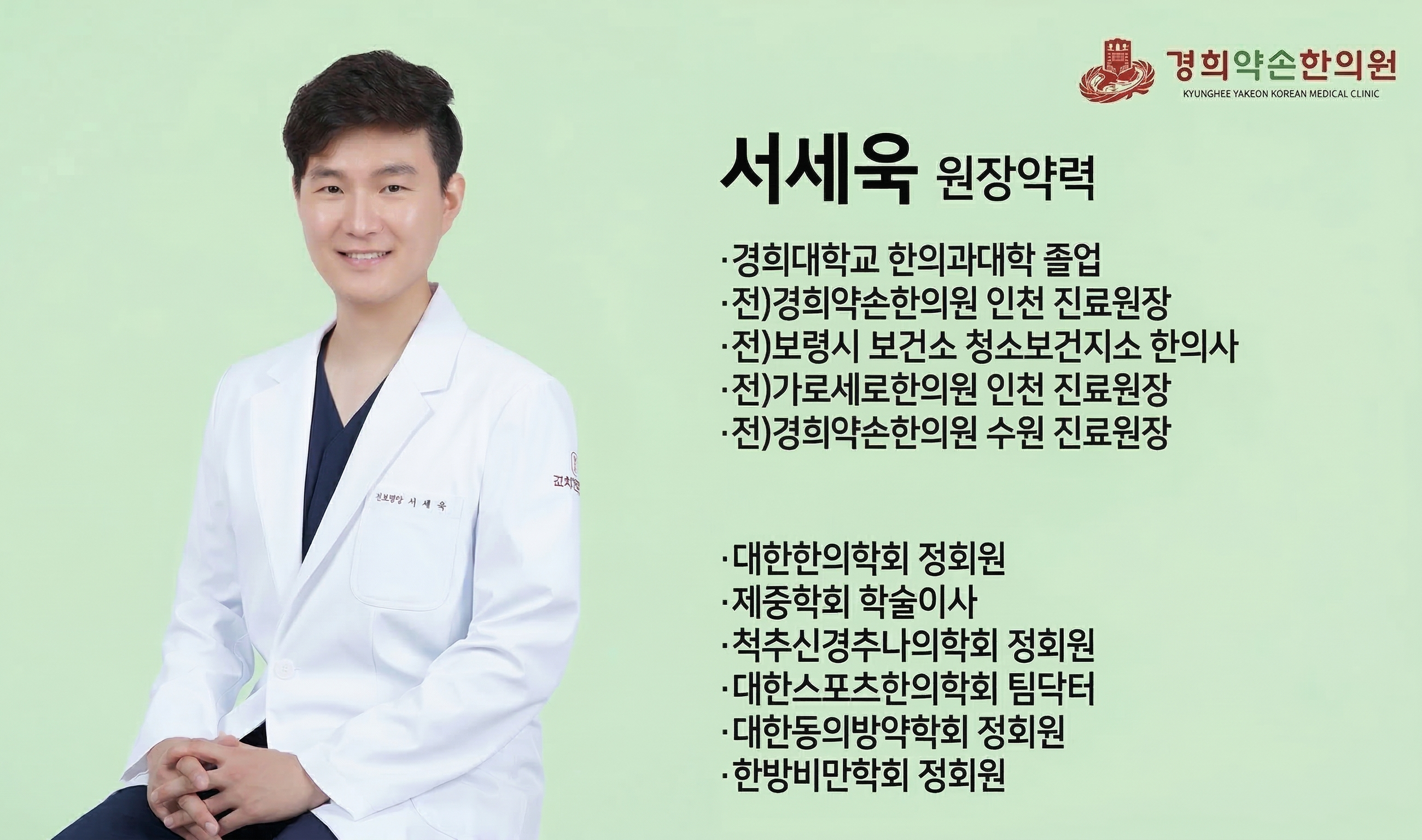
This is Director Seo Se-wook of Kyunghee Yakson Korean Medicine Clinic in Icheon.
Every time spring arrives,
more and more people visit the clinic
because of Icheon allergic rhinitis.
Some come in with
their nose already red and swollen,
clutching a tissue tightly in one hand.
Some keep sneezing
and shyly say, "I'm sorry."
And many come in frowning,
telling me, "It even makes
my head hurt."

"Doctor, every year around this time
my nose runs like a faucet."
"When my nose is blocked I get headaches too,
and I can't get any work done."
"Over-the-counter medicine helps just for that day,
and the next day it's the same all over again."
When the same suffering repeats year after year, it's only natural to feel worn out.
I completely understand that frustration.
Today's topic is exactly this:
why Icheon allergic rhinitis keeps coming back every year,
leading to runny nose, congestion, sneezing, and even headaches,
and how to solve it.
Many people
believe that "rhinitis is just my constitution, so I'll have to live with it forever."
But that isn't necessarily true.
When you boost the immunity of the nasal mucosa
and restore balance throughout the whole body,
many people break free
from that yearly torment.

Today, in particular,
I'll go over the three things that
people suffering from yearly recurring allergic rhinitis are most curious about.
1. Why does it repeat the same way every year?
2. Runny nose, congestion, sneezing, headaches —
how are they treated at a Korean medicine clinic?
3. Herbal-medicine health insurance coverage —
how much will the cost be?
For those whose Icheon allergic rhinitis
returns every year
and keeps them up at night,
I hope this article helps.
Why does it keep repeating the same way every year?
Antihistamines and nasal sprays
quickly calm down
runny nose and sneezing.
But once the medicine wears off, it starts again.
The reason is simple.
They only suppress the symptoms;
the underlying cause itself —
why the nasal mucosa reacts so sensitively —
hasn't changed at all.

People whose rhinitis returns every year
most often have a weakened immune function
in the nasal mucosa.
The body overreacts even to ordinary triggers
like pollen, dust, and cold wind.
When the nose stays blocked for a long time,
pressure builds up around the sinuses,
and a headache comes along around the forehead and brow.
If you've ever wondered, "It's not even a cold,
so why does my head hurt?",
there's a fairly high chance nasal congestion is the cause.
That's why, when I treat rhinitis,
I don't only look at the nose.
I examine sleep quality, digestive function, stress levels,
and the overall condition of the whole body.
After all, the nose is ultimately part of the body.
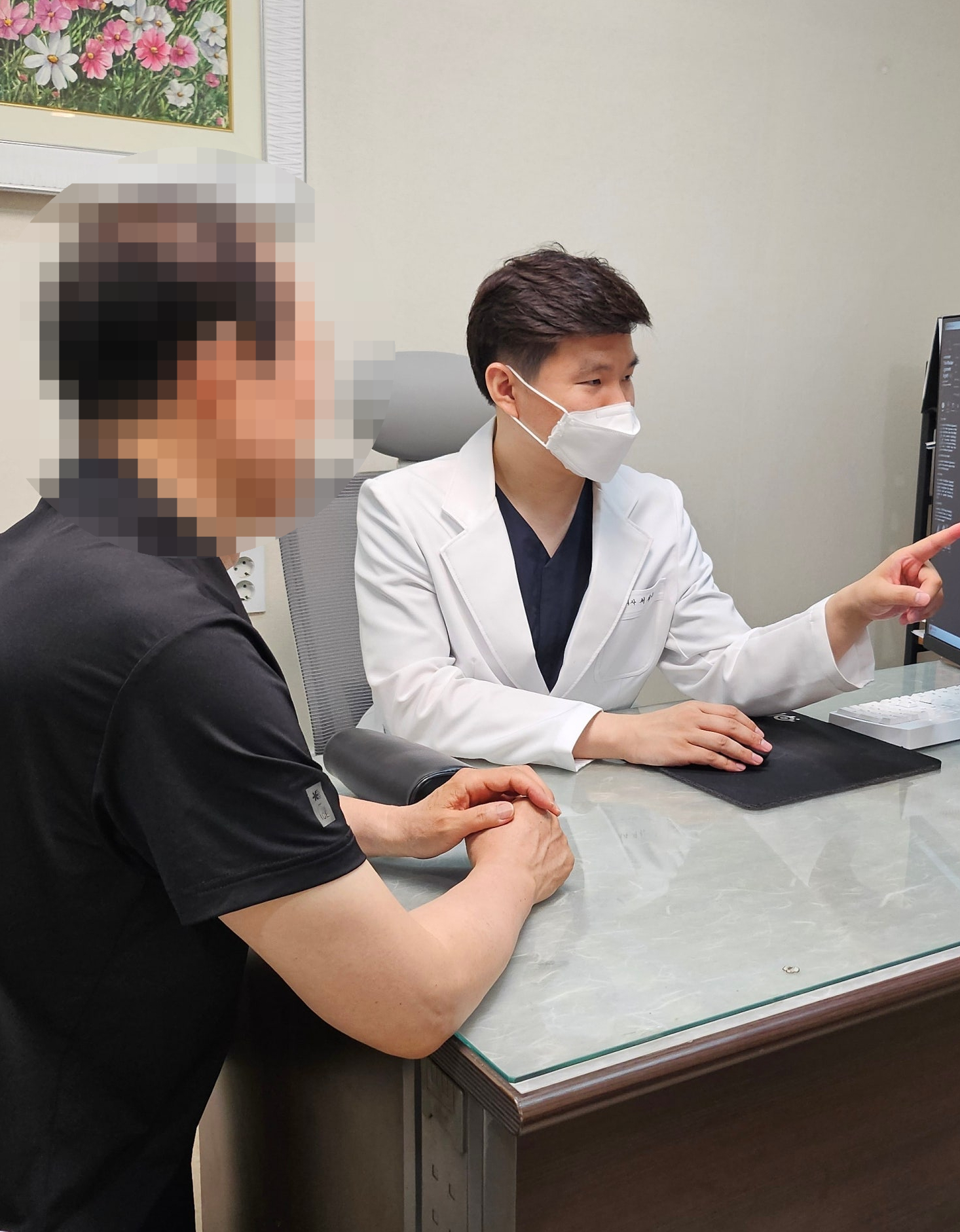
Runny nose, congestion, sneezing, headaches —
how do we treat them at the Korean medicine clinic?
At Kyunghee Yakson Korean Medicine Clinic,
when you visit, we first check your stress level
with an HRV test,
then perform InBody and blood pressure checks.
I believe the most important thing
is to grasp your overall condition first
and then decide on the treatment direction.
[Treatment broadly combines acupuncture, pharmacopuncture, and herbal medicine.]
Acupuncture
reduces inflammation around the nose
and helps circulation in the mucosa.
It's especially helpful
for those whose congestion is so severe
that it brings on headaches.
Pharmacopuncture
is a treatment that delivers herbal-medicine components
directly to the area where they're needed.
Because it can be expected to ease inflammation
and regulate immunity at the same time,
it's a method I often use myself
for recurring rhinitis.
Herbal medicine is tailored to the patient's constitution and symptoms,
and it serves to boost immunity.
Because we decoct it directly in the clinic,
you can take fresh, trustworthy medicine.
When this process steadily builds up,
the nasal mucosa regains its stability,
and even when the change of seasons comes,
you no longer collapse the way you used to.
- Office workers whose noses suffer at every change of season
-Parents worried about a child who falls asleep mouth-open every night because of a stuffy nose -People living with long-standing rhinitis and chronic headaches
If you think, "That sounds just like me,"
I recommend getting an examination at least once.
You can consult comfortably
at Kyunghee Yakson Korean Medicine Clinic in Changjeon-dong, Icheon.

Herbal-medicine health insurance coverage —
how much will the cost be?
It turns out quite a few people
still don't know about this part.
Currently, allergic rhinitis is
a condition covered by herbal-medicine health insurance.
If you receive an herbal-medicine prescription at a Korean medicine clinic,
based on a 10-day course,
you can receive herbal-medicine treatment
with an out-of-pocket cost of about 30,000 to 80,000 won.
If you've been putting off treatment year after year
because you were worried about the cost,
you can set your mind at ease about this part.
The rhinitis that returns every year —
this year, you don't have to put it off.
Let me sum up today's story.
Suppressing only the symptoms with medicine
is the very reason the same suffering repeats every year.
Through acupuncture, pharmacopuncture, and herbal medicine,
when you revive the immunity of the nasal mucosa,
you can feel runny nose, congestion, sneezing, and even headaches
gradually decrease.
With herbal-medicine health insurance coverage,
the cost burden has become much lighter as well.
Icheon allergic rhinitis,
that yearly torment that keeps coming back —
don't just keep enduring it any longer.
This year, I hope you take a proper look at it.
This has been Seo Se-wook of Kyunghee Yakson Korean Medicine Clinic in Icheon.
Until the spring day when you can breathe easily through your nose again,
I'll be with you all the way.
[Pain treatment — this is how I do it.]
If you're curious about the direction of care I pursue
[Is it just degeneration, something we can't help?]
Let's look at the 5 common misconceptions I often hear
[How is pharmacopuncture guided by ultrasound different?]
If tests show nothing wrong yet the same spot keeps hurting
I'll tell you about root-cause treatment
[Do you have questions before Korean medicine treatment?]
I'll explain them to you myself.
[Clinic Hours]
Mon, Wed, Fri 9:00–20:00 (reception closes at 19:00)
Tue, Thu 9:00–18:00 (reception closes at 17:00)
Lunch break (13:00–14:00)
Saturday 09:00–14:00
(reception closes at 13:00; open through lunch with no break.)
Closed every Sunday.
[Directions]
Address: 1st floor, Baeyoung Building, 178 Yeongchang-ro, Icheon-si
Silver Intersection (former KEB/Hana Bank site)
Across from NC Department Store,
the building right next to Davich Optical Icheon Jungang branch
About 100m toward
Shinhan Bank/Kookmin Bank
[By Public Transport]
Gwango-dong bus stop:
Go straight about 200m toward Shinhan/Kookmin Bank
Shinhan Bank bus stop:
Go straight toward Gwango Market,
located across from the central intersection
[Parking Information]
If you use the Gwango Market public parking lot,
1 hour of free parking is available.
Icheon Allergic Rhinitis: When It Returns Every Year — Runny Nose, Congestion, Sneezing, Even Headaches
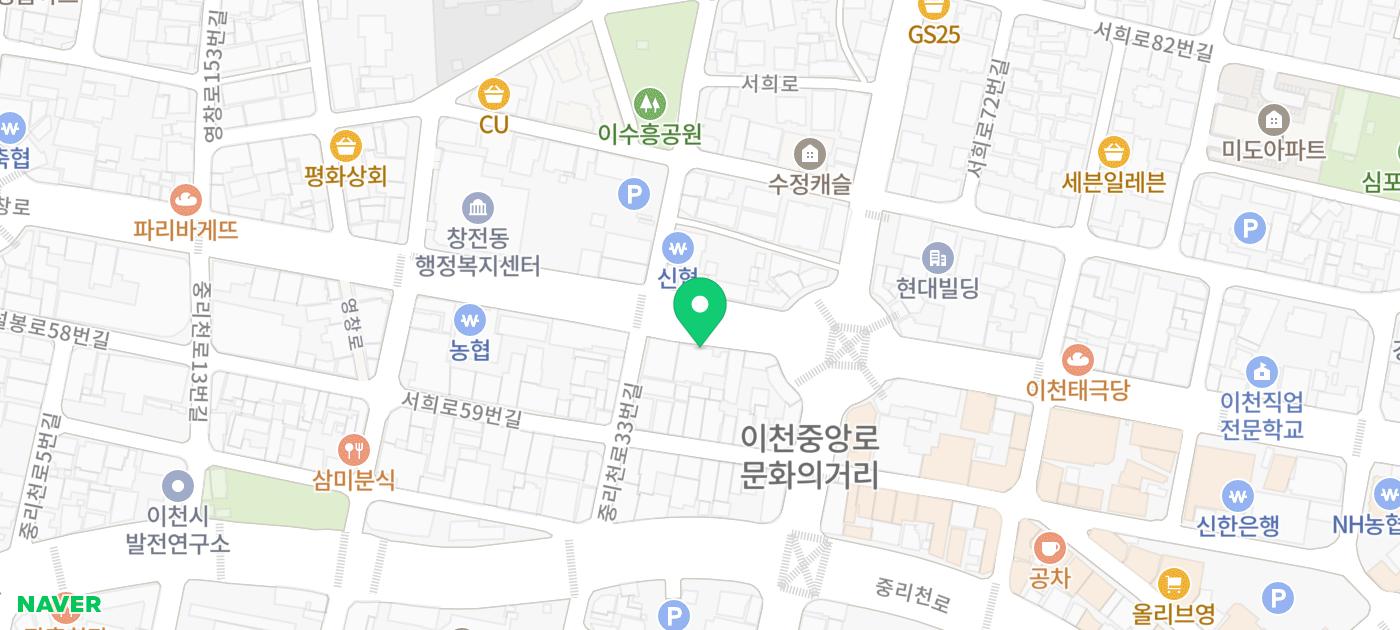
Kyunghee Yakson Korean Medicine Clinic
Kyunghee Yakson Korean Medicine Clinic, 1st floor, 178 Yeongchang-ro, Icheon-si, Gyeonggi-do
Check in at this blog
Other posts about this place
