If the tests show nothing wrong but it still hurts, it isn't all in your head
Hello,
this is Director Seo Se-wook of Kyunghee Yakson Korean Medicine Clinic in Icheon.

I hear these words in my consultation room very often.
"Doctor, I had an MRI and they said there's nothing wrong."
"The X-ray showed my bones are fine too."
"But it still hurts. Am I just being too sensitive?"
When you hear that the tests show nothing wrong,
instead of feeling reassured, you actually end up even more confused.
It clearly hurts, yet they tell you there's no cause,
so you start to wonder whether it's all in your head,
and you grow anxious about whether you'll just have to live like this.
And when people around you say,
"The tests came back fine, so what's the big deal," you feel even more discouraged.
Today I want to speak clearly
about exactly this.
The fact that tests show nothing wrong
does not mean there is no cause for your pain.
There is always a reason it hurts,
and there are ways to confirm it.

When an MRI or X-ray says
"nothing is wrong," what it really means is:
no bone is broken,
no disc has herniated significantly,
the joint structure isn't severely damaged
— that's about it.
These tests are specialized for looking at
structural problems of the bones and joints.
But the cause of pain is not always
in the bones or discs alone.
In fact, the problems we commonly experience in daily life
— shoulder pain, a cold or aching knee,
elbow stiffness, wrist numbness and the like —
very often originate in soft tissues
such as muscles and ligaments.
Microscopic inflammation in these tissues,
partial tears, or swelling
may not show up clearly
on an MRI or X-ray.
So "no abnormality on the tests"
means "there is no major structural problem,"
not "there is nothing wrong at all."
If you confuse these two, you can end up
missing the right time for treatment even though you're in pain.
Many patients tell themselves
"it's probably nothing" and just endure it.
They do this all the more because the tests showed nothing wrong.
But the fact that pain continues
means that somewhere in your body a signal is being sent.
If you ignore that signal and grit your teeth,
you move less in order to protect the painful area,
the surrounding muscles weaken too,
and in many cases the problem gradually grows worse.
Especially if any of the following applies to you,
it's worth getting it checked.
When you were told the tests showed nothing wrong
but the pain has continued for more than two weeks,
when painkillers help briefly
but it hurts again once they wear off,
when the same area repeatedly hurts
every time you make a certain movement,
when you feel especially stiff and the pain
is severe when you get up in the morning.
If this is your situation, the problem is more likely
not in the bone or disc, but in the surrounding soft tissues
— the muscles, ligaments, tendons, and bursae.

So how do we check for
these soft-tissue problems?
At our clinic
we make use of ultrasound examination.
Ultrasound lets us see the condition of tissues
such as muscles and ligaments in real time.
While the patient raises their arm
or bends their knee,
we watch together on the screen
how the tissue moves at that very moment.
What matters here is not the equipment itself,
but the fact that the patient
sees their own condition with their own eyes.
"This part right here is swollen,"
"I can see a problem in this tendon"
When we look at it together like this,
the anxiety you'd felt while wondering "is it all in my head"
is relieved.
Simply confirming that your pain is real and tangible
is enough to change a patient's expression, I've found.
Once the cause is confirmed, we proceed with the matching treatment.
Watching the ultrasound,
we administer pharmacopuncture to the exact location.
We don't stop at short-term pain relief;
we set up a step-by-step treatment plan all the way through
reducing swelling → restoring function → preventing recurrence.
Progress can vary from person to person,
but at the first consultation we discuss the whole course together before we begin.
"No abnormality on the tests"
does not automatically mean "nothing is wrong."
Depending on the test you use,
the area it can reveal simply differs,
and if there is pain, its cause is certainly somewhere.
It isn't all in your head.
If you've been frustrated by being told that you're in pain but the cause is unknown,
I recommend getting it checked once.
Just confirming it changes how you feel,
and from there the direction of treatment takes shape.
This has been Director Seo Se-wook of Kyunghee Yakson Korean Medicine Clinic in Icheon.
Thank you.
[Recommended reading]
[Go to Naver Talk]
[Clinic Hours]
Mon, Wed, Fri 9:00–20:00 (registration closes at 19:00)
Tue, Thu 9:00–18:00 (registration closes at 17:00)
Lunch break (13:00–14:00)
Saturday 09:00–14:00 (registration closes at 13:00)
We are closed every Sunday.
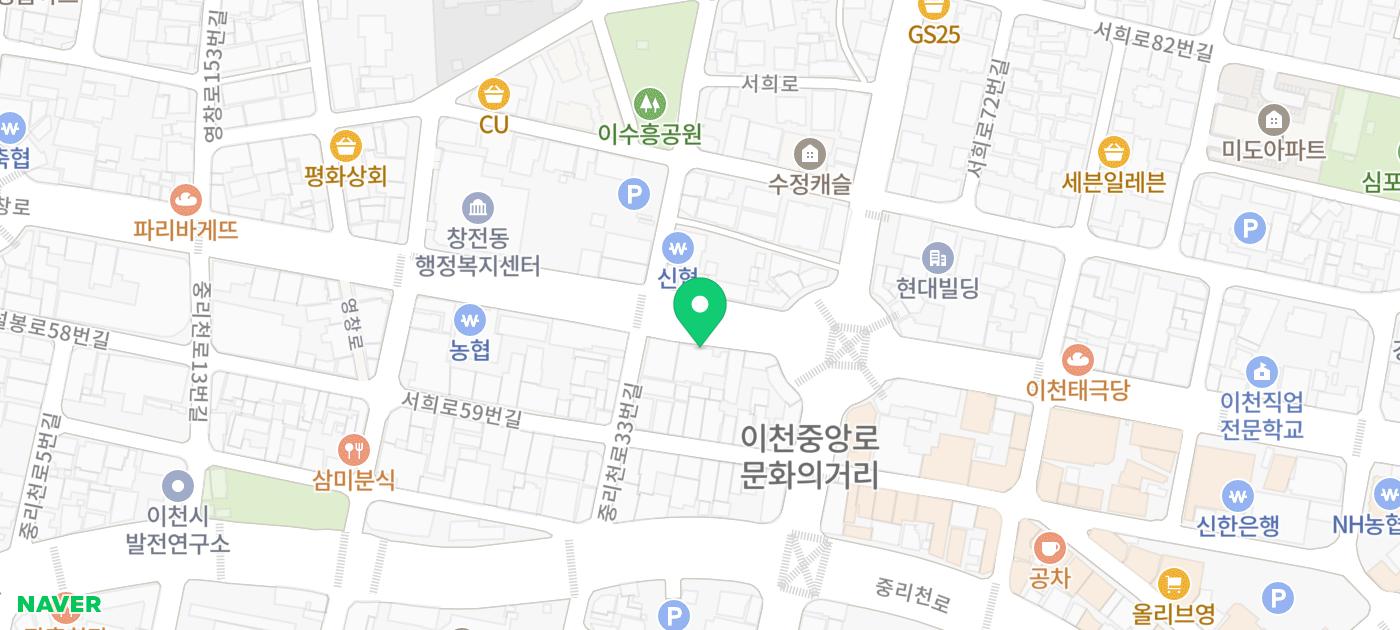
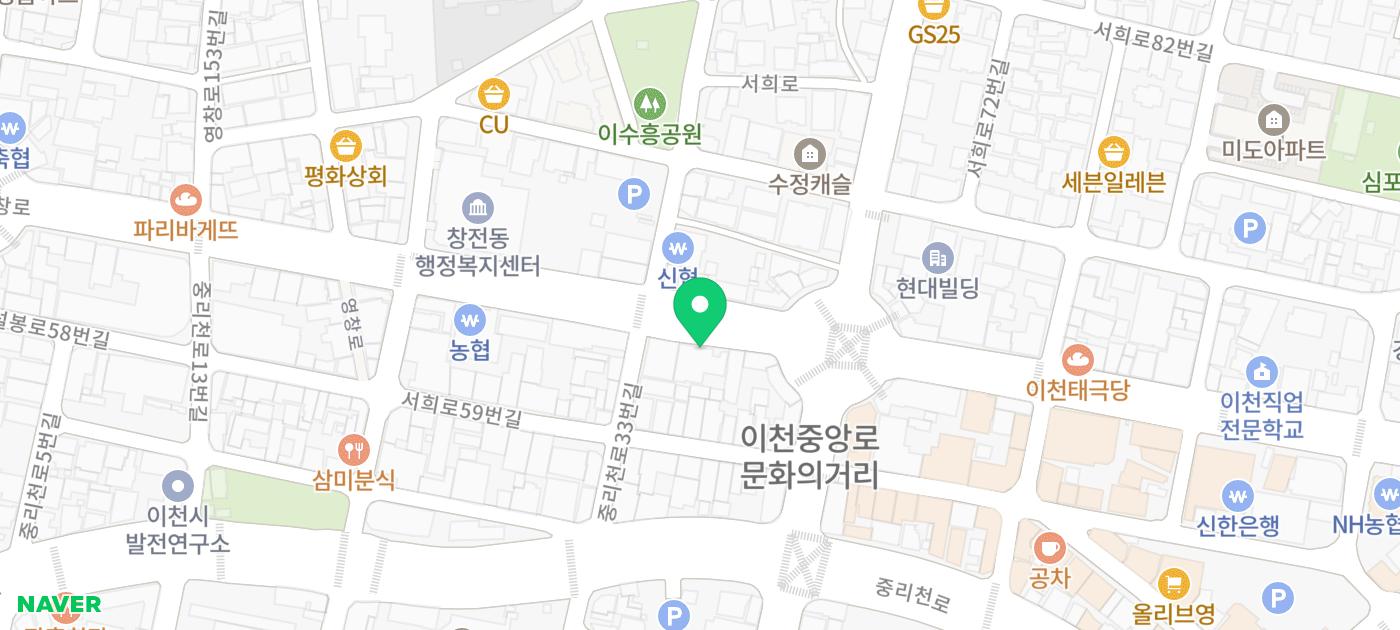
[Directions]
Address: 1st floor, Baeyoung Building, 178 Yeongchang-ro, Icheon-si
Silver Intersection (former KEB/Hana Bank site)
Across from NC Department Store,
in the building right next to Davich Optical Icheon Jungang branch
About 100m toward
Shinhan Bank/Kookmin Bank
[By Public Transit]
Gwango-dong stop:
Go straight about 200m toward Shinhan/Kookmin Bank
Shinhan Bank stop:
Go straight toward Gwango Market,
then it's across the Jungang Intersection
[Parking Information]
When using the Gwango Market public parking lot,
1 hour of free parking is available.
Kyunghee Yakson Korean Medicine Clinic in Icheon
Kyunghee Yakson Korean Medicine Clinic
178 Yeongchang-ro, Icheon-si, Gyeonggi-do
Check-in at this blog
Other posts about this place