Icheon Ankle Pain: That Sharp Twinge When You Walk Down Stairs — Finding the Cause with Ultrasound
Icheon ankle pain that sharp twinge when you walk down stairs
Finding the cause with ultrasound
Hello.
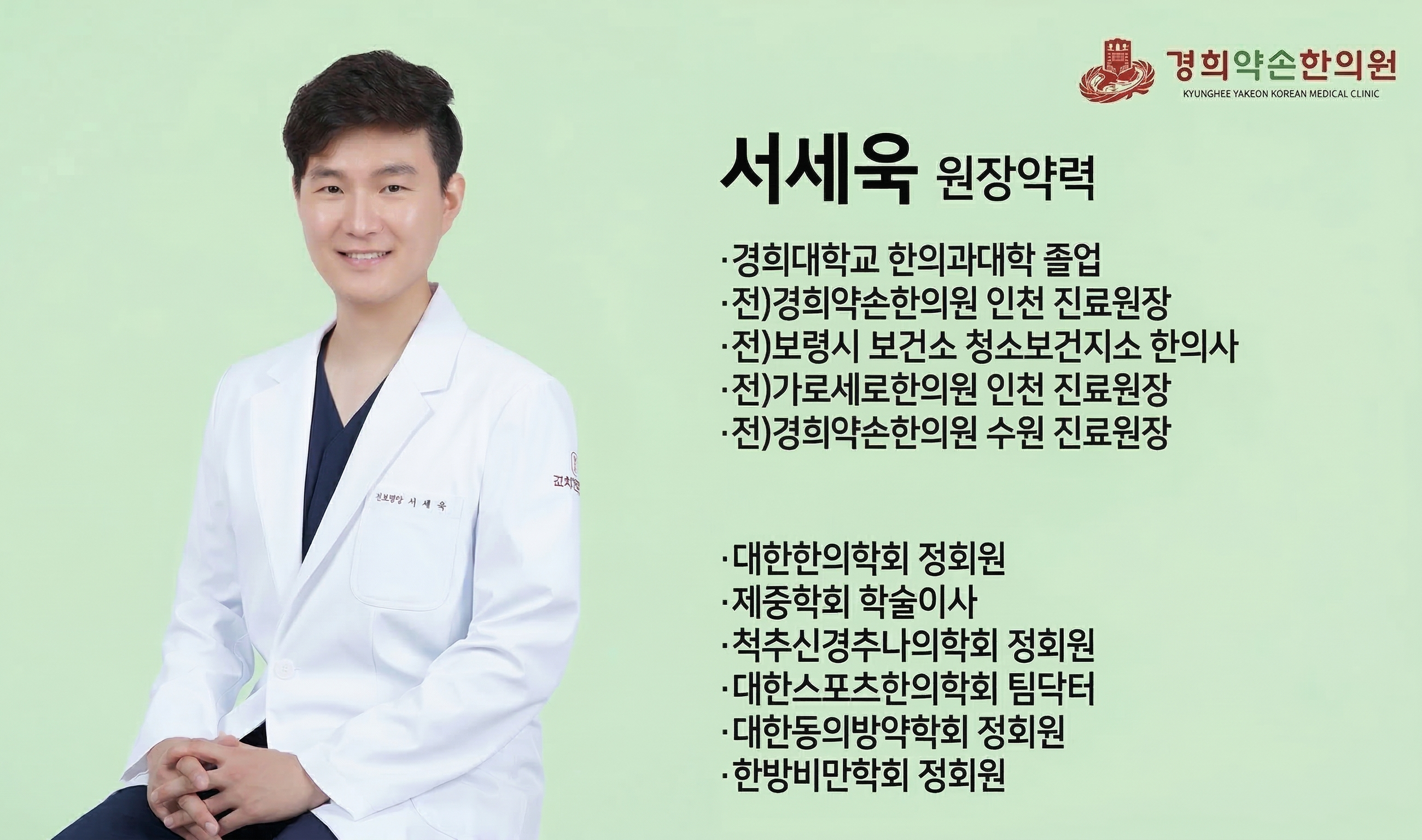
This is Seo Se-wook of Kyunghee Yakson Korean Medicine Clinic in Icheon.
Today I'm writing for those who suffer from a sharp, stabbing ankle pain
when going down stairs.
I often see patients like this in my consultation room.
They put up with it because walking is fine,
and the moment they step down a single stair
a sharp pain shoots through the outside of the ankle,
and only then do they think, "Is this something wrong?"
and come in.
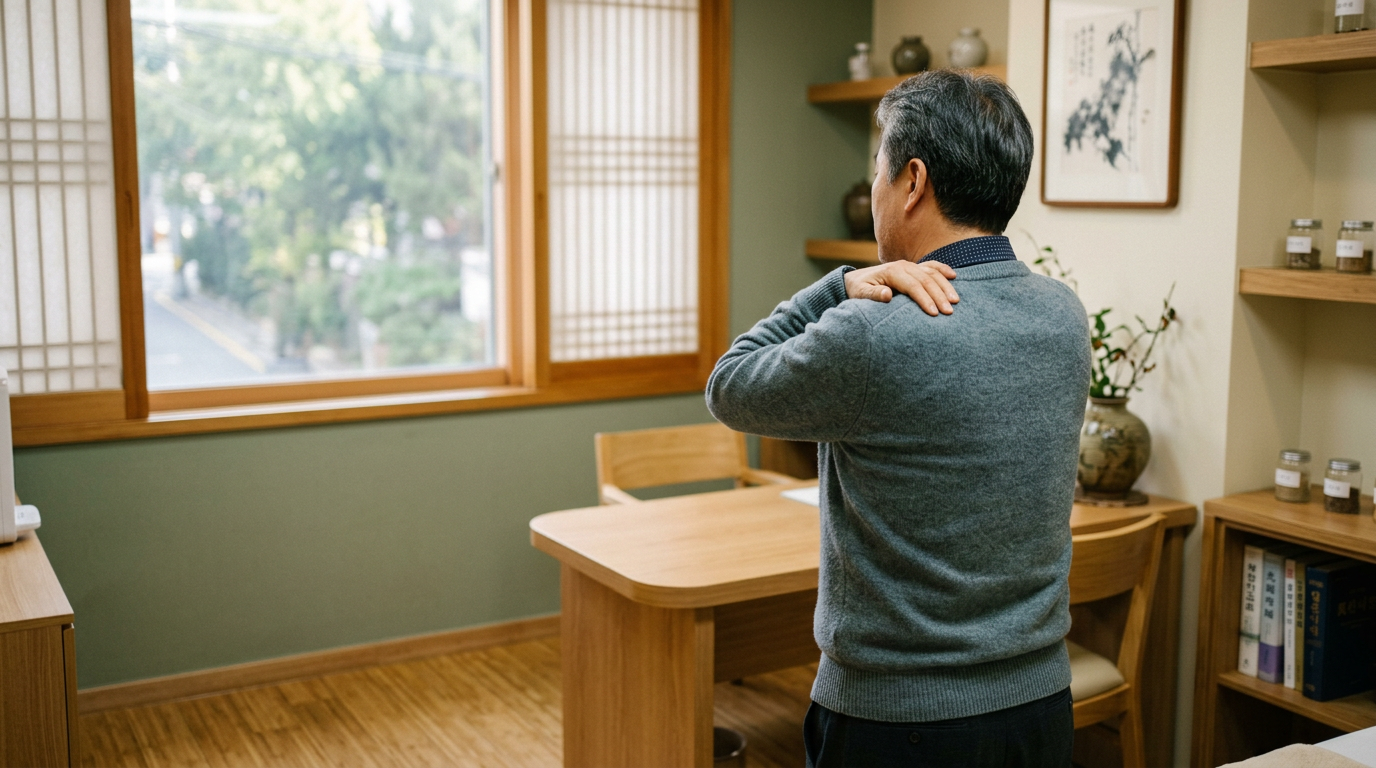
When they open the door and walk in, they walk perfectly normally,
but when I ask, "Could you try the motion of going down a step?"
their expression freezes at exactly that moment.

Every time I see that,
it weighs on me to think how long they must have endured it.
What they say tends to be similar.
"I sprained my ankle once a long time ago —
could it still be acting up because of that?"
"When I get an X-ray at the hospital
they say there's nothing wrong with the bone,
so why does it hurt this much only when I go down stairs?"
"It was fine when I walked, so I just left it,
but the sharp twinges seem to be coming more and more often."
That's right.
When it's fine while walking
but hurts only with certain movements, it's all the more vague and frustrating.
So many people think, "It'll get better if I rest a bit more,"
and let it slide for months on end.

The topic I'll cover today
is exactly that: Icheon ankle pain,
the true identity of the sharp pain on stairs, and
a treatment method that finds the cause with ultrasound.
I'll walk through the following three points in order.
1. Why does it only twinge on stairs — what's the problem?
2. Ankle treatment: when is the fastest time to start?
3. The process of finding the cause with ultrasound and carrying it through to treatment
1. Why it twinges only on stairs
Were you told there's nothing wrong with the bone?
In most such cases, the cause is a ligament problem.
The ligaments on the outside of the ankle
hold the ankle from rolling inward,
and they're the first to be damaged when you twist it.
When this ligament is stretched or partially torn,
it doesn't show up on an X-ray at all.
As you go down stairs, the ankle bends at a certain angle,
and stress concentrates on the damaged ligament,
which is where that twinge comes from.
On flat ground it doesn't reach that angle,
so there's no pain.
Besides ligaments, there are also cases where the ankle tendons become inflamed,
or where small injuries from repeated sprains
have accumulated.

When the cause is different, the treatment must be different too.
At Kyunghee Yakson Korean Medicine Clinic,
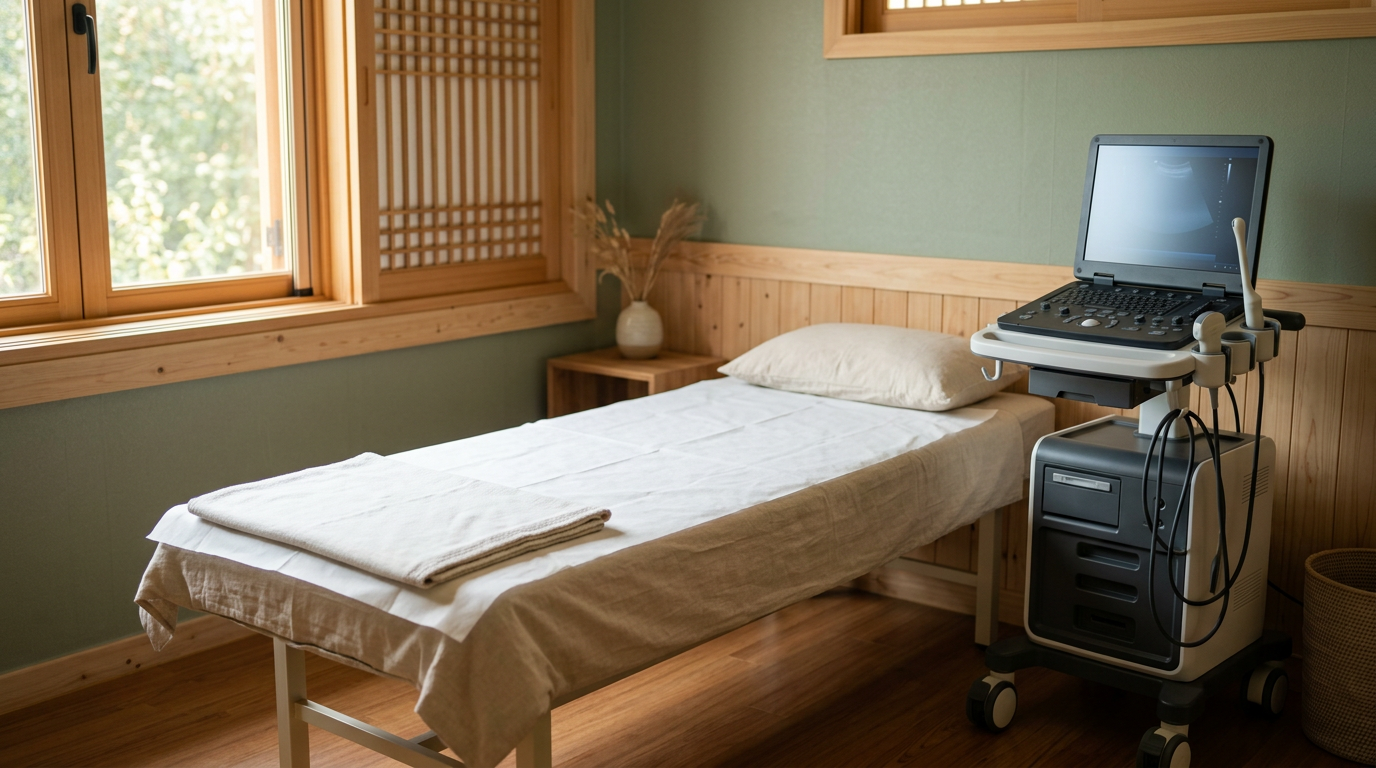
in such cases we first perform a detailed ultrasound examination.
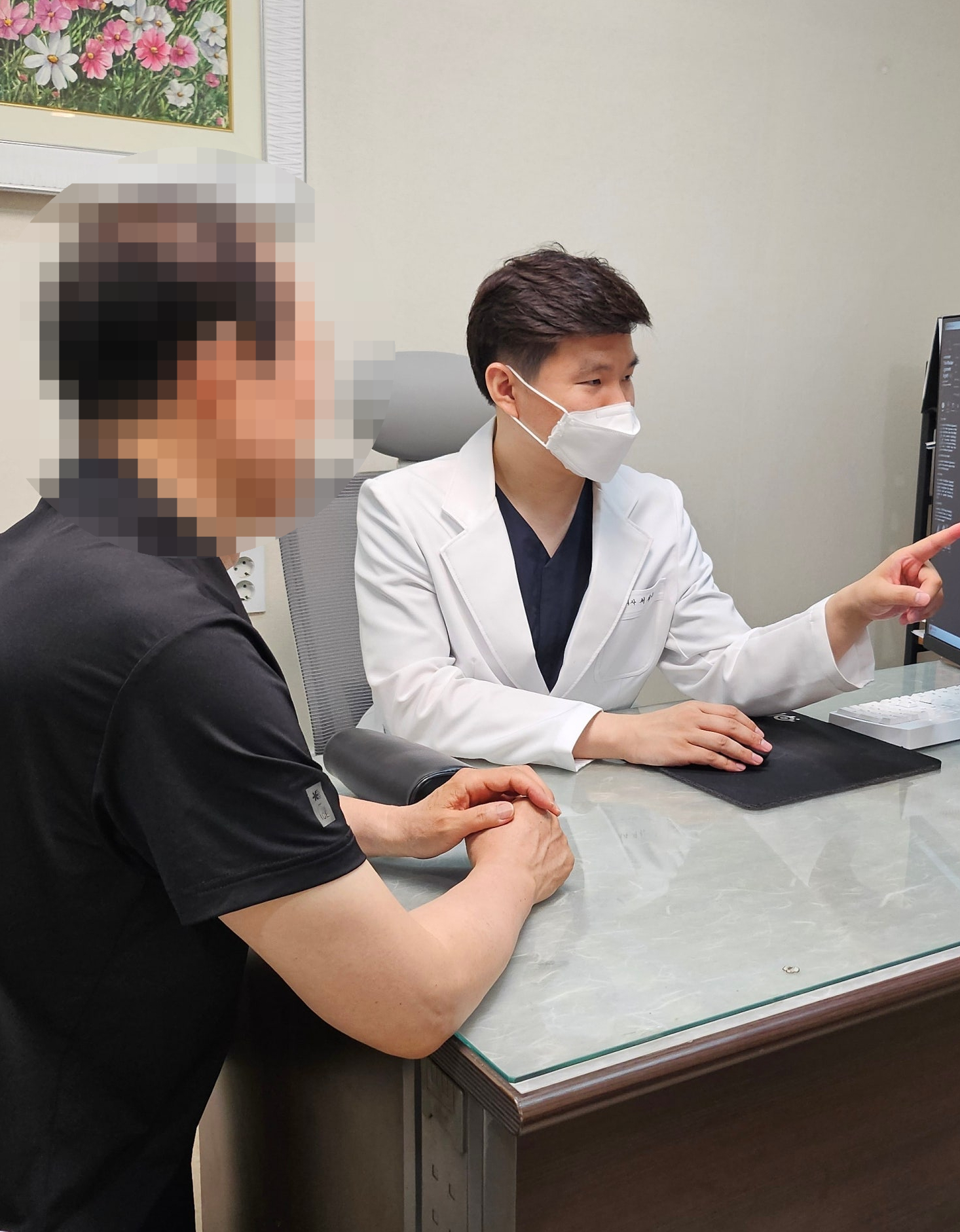
We check the state of the ligaments and tendons directly with our own eyes,
find the cause, and set the treatment direction.
We can show you directly on the screen, "This is where the problem is,"
so it's different from starting treatment
after hearing only a vague complaint of pain.

2. Ankle treatment:
when is the fastest time to start?
The most regrettable cases are
patients who come in 2 to 3 months
after twisting their ankle.
"I thought it would heal if I just rested a little."
If you keep going about daily life during this period
while the ligament hasn't fully recovered, it stiffens in the stretched-out state.
That's the reason for the continued twinge on stairs
and the reason the ankle keeps getting sprained.
Those who fall under the following
need to get it checked quickly.
- If swelling remains a week after the sprain
-If pain comes only on stairs or slopes -If you've sprained the same ankle two or more times -If it feels stiff or achy when you put weight on it
Recovering it properly in the early stage
ultimately shortens the treatment period.
When I see people in Changjeon-dong, Icheon
who have carried ankle discomfort for a long time,
I very often hear them say,
"I wish I'd gotten treatment sooner back then."
Before you come to regret it like that,
I recommend getting it checked once.

3. Finding the cause with ultrasound, through to treatment
Ankle pain treatment at Kyunghee Yakson Korean Medicine Clinic in Icheon
proceeds in three stages.
Stage 1: Detailed ultrasound examination
First, with an ultrasound examination,
we directly check the state of the ligaments and tendons.
Even for the same ankle pain,
the treatment method completely changes
depending on which area is the problem.
If you start treatment without identifying the cause,
the effect is slow and recurrence is common.
Stage 2: Reducing swelling and tissue recovery
Watching the location with ultrasound,
we perform pharmacopuncture treatment.
We inject components extracted from herbal medicine
directly into the damaged area
to calm the inflammation and aid tissue recovery.
By combining acupuncture and physical therapy,
we relax the surrounding muscle tension
and help the swelling subside.
[How is pharmacopuncture guided by ultrasound different?]
Read the detailed article ▼
Stage 3: Functional recovery and recurrence prevention
Once the swelling subsides and the pain eases,
this is the stage of restoring ankle stability.
If the ligament stiffens while loose,
a vicious cycle sets in where you sprain the same spot again.
By combining an herbal medicine prescription,
we help from the inside
so the damaged tissue recovers solidly.
We also provide guidance on ways
to reduce the strain placed on the ankle in daily life.
Those who stand and work for long hours,
those who use their feet a lot, like delivery or fieldwork,
those who frequently sprain their ankles,
and those in their 40s to 60s who feel their ankle isn't what it used to be —
this treatment process is especially needed for them.

Here is a summary of today's key points.
A sharp twinge on stairs
is highly likely to be ligament damage.
A normal X-ray result alone is not enough.
The sooner ankle treatment starts, the faster the recovery.
The longer you endure and hold out,
the more the ligament stiffens while stretched out.
You must first confirm the cause with ultrasound
and treat by focusing on that area
to resolve Icheon ankle pain without recurrence.
For those who have come to fear stairs,
I hope you'll start by confirming the cause.
This was Seo Se-wook of Kyunghee Yakson Korean Medicine Clinic in Icheon.
Thank you.
[This is the mindset with which I provide care.]
[I'll tell you everything you're curious about before treatment.]
[You were told it's degenerative and nothing can be done?]
The 5 misconceptions I hear most often
[Consultation hours]
Mon, Wed, Fri 9:00-20:00 (registration closes at 19:00)
Tue, Thu 9:00-18:00 (registration closes at 17:00)
Lunch (13:00-14:00)
Saturday 09:00-14:00
(registration closes at 13:00, open through lunch without a break.)
We are closed every Sunday.
[Directions]
Address: 1F Baeyoung Building, 178 Yeongchang-ro, Icheon
Silver Intersection (former Korea Exchange/Hana Bank site)
Across from NC Department Store,
in the building right next to Davich Optical Icheon Central branch
About 100m toward Shinhan Bank/Kookmin Bank
[By public transport]
Gwango-dong bus stop:
Go straight about 200m toward Shinhan/Kookmin Bank
Shinhan Bank bus stop:
Go straight toward Gwango Market and
it's across from the Jungang Intersection
[Parking information]
When using the Gwango Market public parking lot,
1 hour of free parking is available.
Icheon ankle pain that sharp twinge when you walk down stairs
Finding the cause with ultrasound
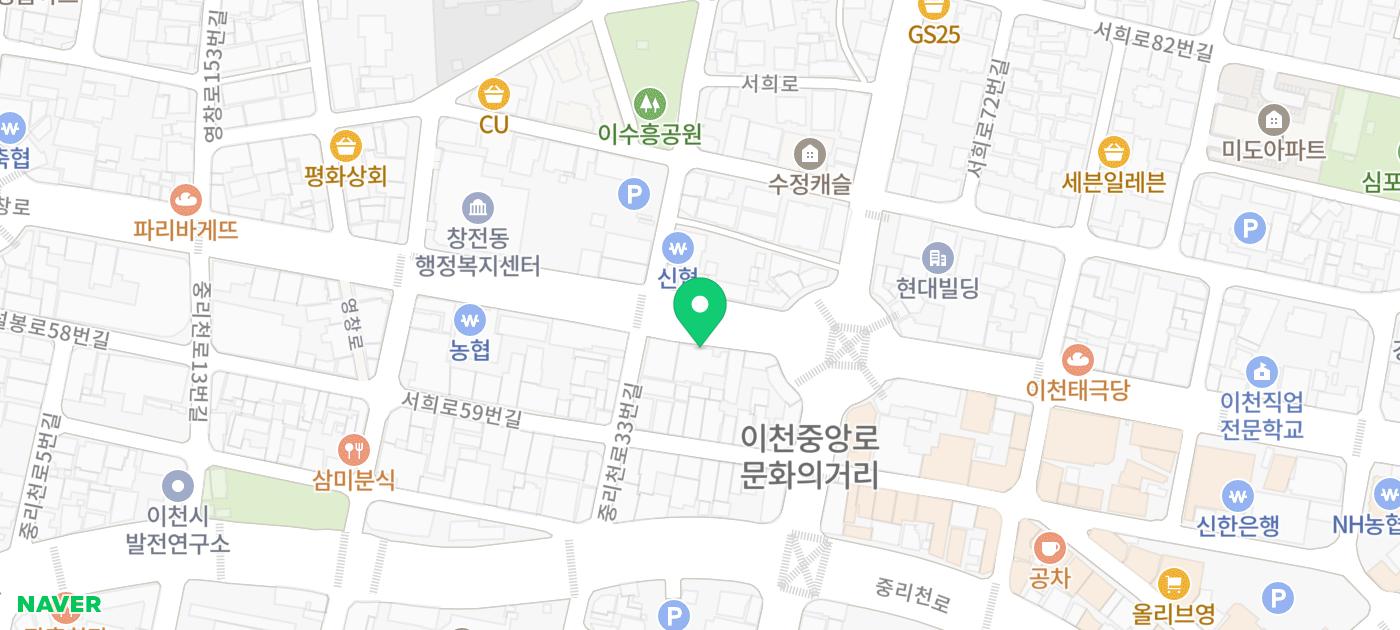
Kyunghee Yakson Korean Medicine Clinic
Kyunghee Yakson Korean Medicine Clinic, 1F, 178 Yeongchang-ro, Icheon-si, Gyeonggi-do
Check in at this blog
Other posts about this place