One of the causes of osteoarthritis? Its relationship with meniscus injury

Knee pain is one of the most common symptoms among middle-aged and older adults.
Many people complain of pain especially when going up and down the stairs, or when standing up after sitting for a long time.
In such cases, most people think of osteoarthritis,
but in reality, damage to cartilage structures such as a meniscus injury is by no means a rare cause.
The two conditions are closely related, and cartilage damage can become a major pathway leading to arthritis.
In this article, we examine the relationship between osteoarthritis and meniscus injury from a structural perspective, and suggest an appropriate direction for treatment.
1. What is osteoarthritis?
1.1 Definition and pathophysiology
Osteoarthritis is a condition in which the gradual wear and damage of the joint cartilage narrows the joint space,
increasing friction between the bones and causing inflammation and pain.
Aging, repeated joint use, and weight gain mainly act as the major contributing factors.

1.2 Main symptoms
Pain on the inner side of the knee or a dull discomfort
A grinding sound or stiffness during joint movement
Joint stiffness after waking in the morning (resolving within 30 minutes)
A feeling that the knee gives way while walking
1.3 Stages of progression
Stage
Characteristics
Example symptoms
Imaging findings
Stage 1 (early)
Cartilage softening begins
Mild stiffness, discomfort
Joint space maintained, microscopic changes
Stage 2 (mild)
Cartilage wear progresses
Pain when going up and down stairs
Irregular cartilage surface, osteophyte formation begins
Stage 3 (moderate)
Cartilage erosion, reduced cartilage space
Increased pain when walking, stiffness
Reduced joint space,
distinct osteophyte
Stage 4 (advanced)
Near-total loss of cartilage, exposed bone
Persistent pain, restricted joint movement
Loss of joint space, bone-on-bone friction,
bone sclerosis
2. What is a meniscus injury?

2.1 Structure and function
The meniscus is a cartilage pad inside the knee joint that absorbs shock between the femur and the tibia and
helps maintain the stability of the joint.
2.2 Causes and classification of injury
Traumatic injury: sports activity, sudden rotation of the knee
Degenerative injury: cartilage gradually weakens with repeated use and aging
Classification: horizontal, vertical, radial, complex, etc.
2.3 Main symptoms
A catching sensation in the knee in certain positions
Pain when bending and straightening
Swelling, joint locking
A sense of instability under weight bearing
3. The correlation between meniscus injury and osteoarthritis
3.1 The mechanism by which cartilage damage causes arthritis
When the meniscus is damaged, the shock-absorbing function within the knee declines, and as a result excessive pressure is transmitted to the joint cartilage. Over the long term, this pressure accelerates the wear of the cartilage and can progress into osteoarthritis.
3.2 Distinguishing through ultrasound diagnosis
Because osteoarthritis and meniscus injury show similar patterns of pain, imaging diagnosis is essential for an accurate distinction.
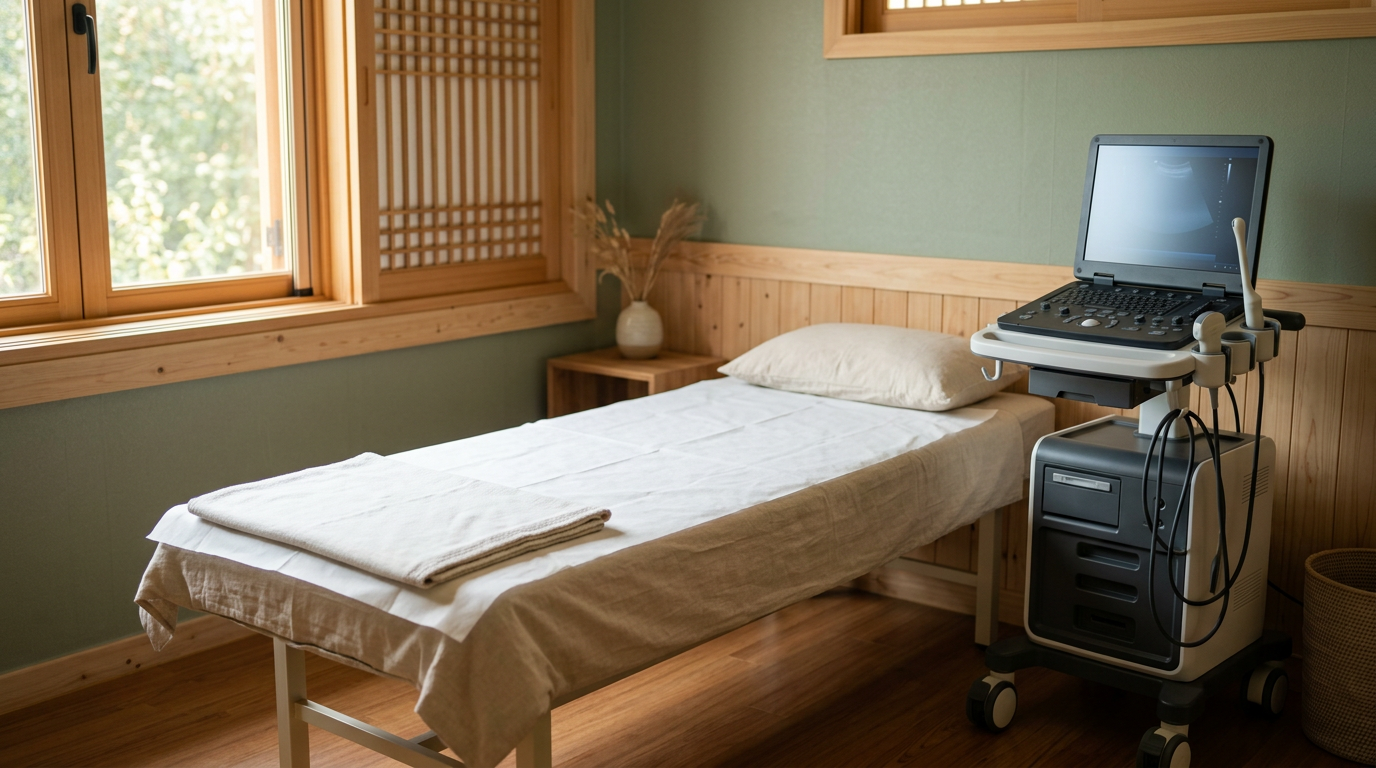
Musculoskeletal ultrasound is a highly useful tool because it can check joint inflammation, increased synovial fluid, the cartilage border, and whether the meniscus is torn in a non-invasive, real-time manner.
Moreover, since it allows dynamic diagnosis while moving the knee, functional problems can be identified at the same time.

3.3 The difficulty of treatment when both conditions coexist
If the meniscus is damaged while osteoarthritis is already advanced, establishing a treatment plan becomes more complex and the recovery period tends to be longer. In such cases, a multifaceted approach is needed, including pain control, functional recovery, and joint alignment.
A real example: be careful if you are this kind of patient
There was a 58-year-old female patient who had suffered pain on the inner side of her knee for more than 6 months.
Initially she was diagnosed with stage 2 osteoarthritis and received only medication, but the pain did not subside, and a 'catching sensation' when bending the knee along with localized tenderness persisted.
After visiting the Korean medicine clinic, a musculoskeletal ultrasound examination revealed a degenerative deformation of the medial meniscus, and after applying a combined treatment of pharmacopuncture and herbal medicine along with Chuna manual therapy, the pain gradually decreased and walking stability was restored.
As in such cases, which are easily mistaken for simple arthritis,
accurate differential diagnosis and a treatment approach centered on functional recovery are extremely important.
4. Treatment strategies from the perspective of Korean medicine
4.1 Correcting muscle-ligament imbalance
In Korean medicine, we do not look only at the cartilage; instead, the harmony of the muscles, ligaments, and the flow of qi and blood around the joint is at the center of treatment. When the imbalance is resolved, the distribution of load within the joint also improves, which can ease cartilage damage.
4.2 Combined treatment with pharmacopuncture, herbal medicine, Chuna, and more
Pharmacopuncture: anti-inflammatory effect and promotion of regeneration at the inflamed area
Herbal medicine: strengthens the circulation of qi and blood around the joint and aids tissue regeneration
Chuna manual therapy: effective in restoring joint alignment and relaxing tense muscles
4.3 Treatment prognosis and management
In actual clinical practice, there was a case among patients who visited complaining of pain on the inner side of the knee in whom imaging diagnosis confirmed findings of degenerative deformation of the meniscus.
For this patient, we combined
anti-inflammatory pharmacopuncture on the inner side of the knee,
taking herbal medicine that aids the circulation of qi and blood,
and Chuna manual therapy on the joint area;
the pain began to ease from the second week, and by the fourth week the pain on walking up stairs had disappeared and a recovery in range of motion was confirmed.

5. Conclusion and advice for patients
Just because you have knee pain does not mean you should immediately conclude that it is 'arthritis.'
In particular, if you have recurring pain, a catching sensation when bending the knee, or sudden swelling, you should suspect a meniscus injury.
If this injury is left unaddressed, it can progress into osteoarthritis, so early diagnosis and appropriate treatment are key.
Accurate diagnosis, personalized treatment, and an integrative approach that considers even the root cause are the key to protecting your knee health.