Icheon Piriformis Syndrome — When Just Sitting Sends a Sharp Pain Through Your Buttock
Icheon Piriformis Syndrome
When Just Sitting Sends a Sharp Pain Through Your Buttock
Hello.
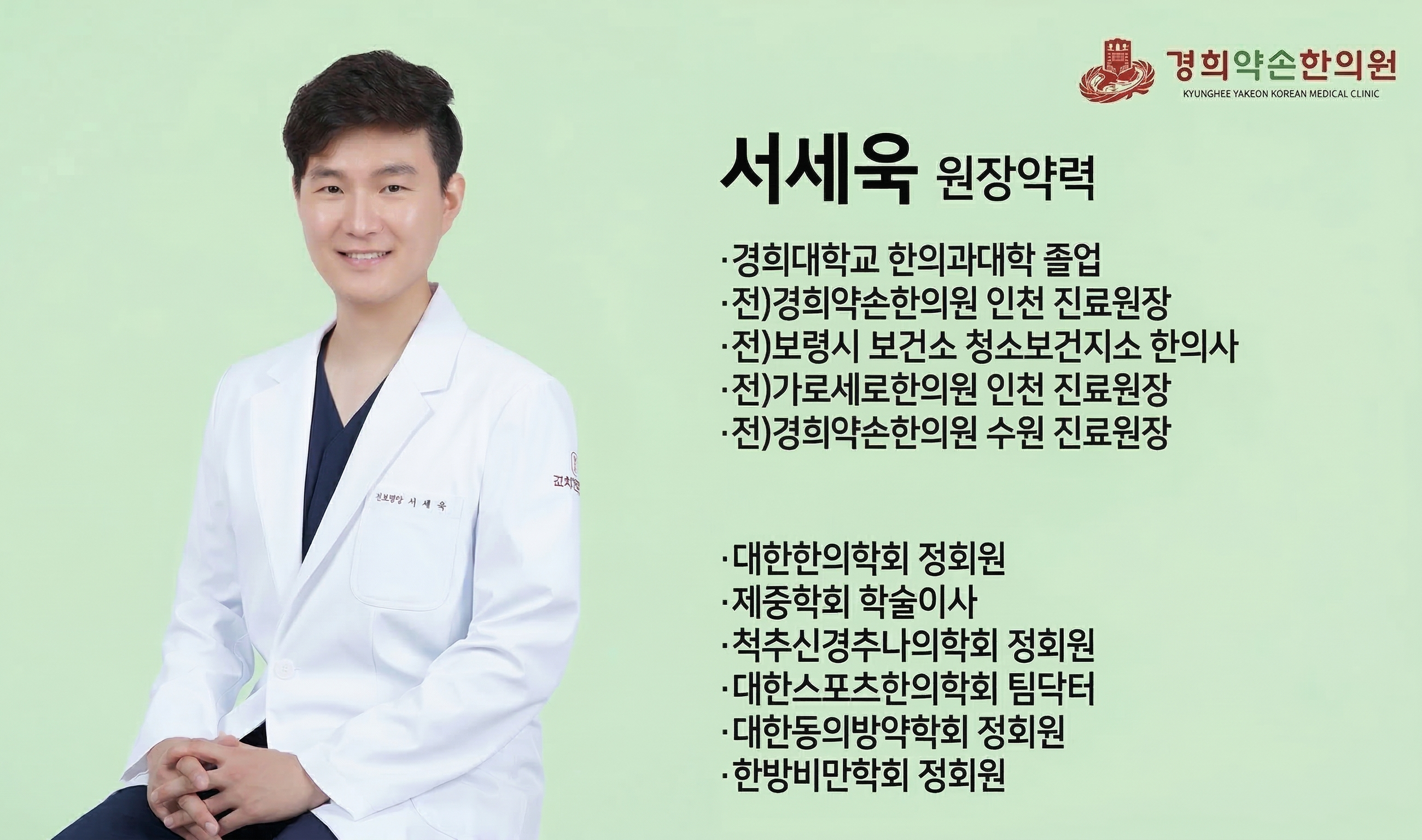
This is Director Seo Se-wook of Kyunghee Yakson Korean Medicine Clinic in Icheon.
Lately in the clinic
I have been seeing an unusually high number of piriformis syndrome patients.
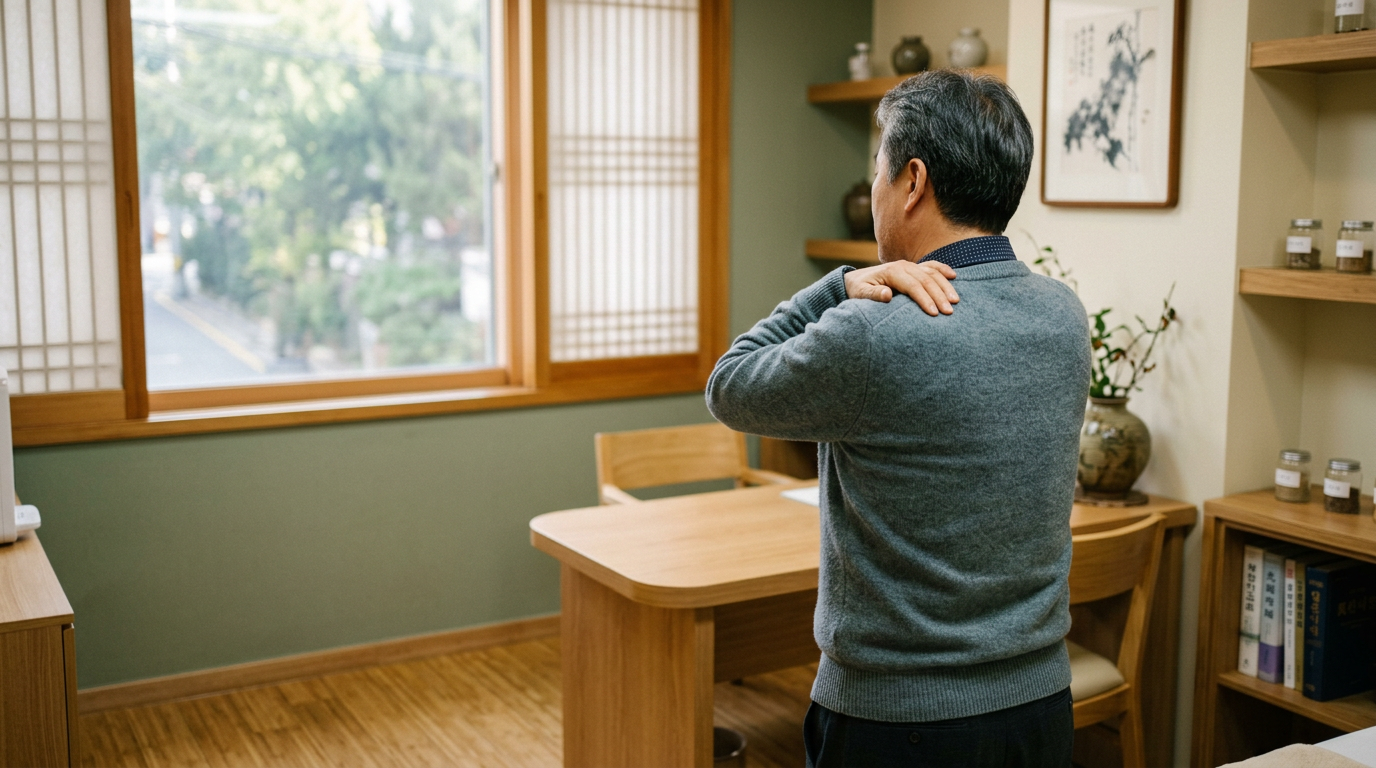
People who, the moment they sit down,
shift their hips this way and that,
searching for a comfortable position,
and people who, when standing up after sitting,
clutch one side of the buttock
and wince in pain.
"Doctor,
when I sit, a sharp tingling runs from my buttock all the way down my leg."
"After just an hour of sitting at work,
my buttock aches so much I can't stand it."
"I thought it was a disc and had an MRI, but it came back normal.
So what on earth is the problem?"
It clearly hurts, yet not knowing the cause
is so unsettling — I fully understand that anxiety.

Today's topic is
Icheon piriformis syndrome.
Piriformis syndrome
is not a condition that requires surgery.
However, if the exact cause is not found,
the same pain can keep recurring for months.
In today's article
I will talk about three things.
1. My MRI is normal —
so why does it hurt this much?
2. How is it treated?
How long does treatment take?
3. After treatment,
how do I keep it from coming back?
For those losing sleep over Icheon piriformis syndrome,
I hope this article helps.
My MRI is normal —
so why does sitting cause a sharp pain?
The piriformis is a small muscle deep within the buttock.
It connects the pelvic bone to the thigh bone.

But right beneath this muscle
runs the thickest nerve in our body,
the sciatic nerve.
When you sit in a chair,
your body weight presses on the buttock and compresses the piriformis.
In a healthy state this causes no real problem,
but if the piriformis is knotted or swollen,
it directly compresses the sciatic nerve beneath it.
That is why, the moment you sit,
your buttock tingles,
the back of your thigh pulls,
and in severe cases a numb sensation runs down
to your calf and even the sole of your foot.
The symptoms are
very similar to a lumbar disc, but there is one decisive difference.
With a disc, the nerve is compressed inside the spine,
whereas with piriformis syndrome,
a buttock muscle is pressing on the nerve.

Because an MRI is a test that checks
the condition of the spine,
piriformis problems often do not show up.
This is exactly why pain persists
even when the "MRI is normal."
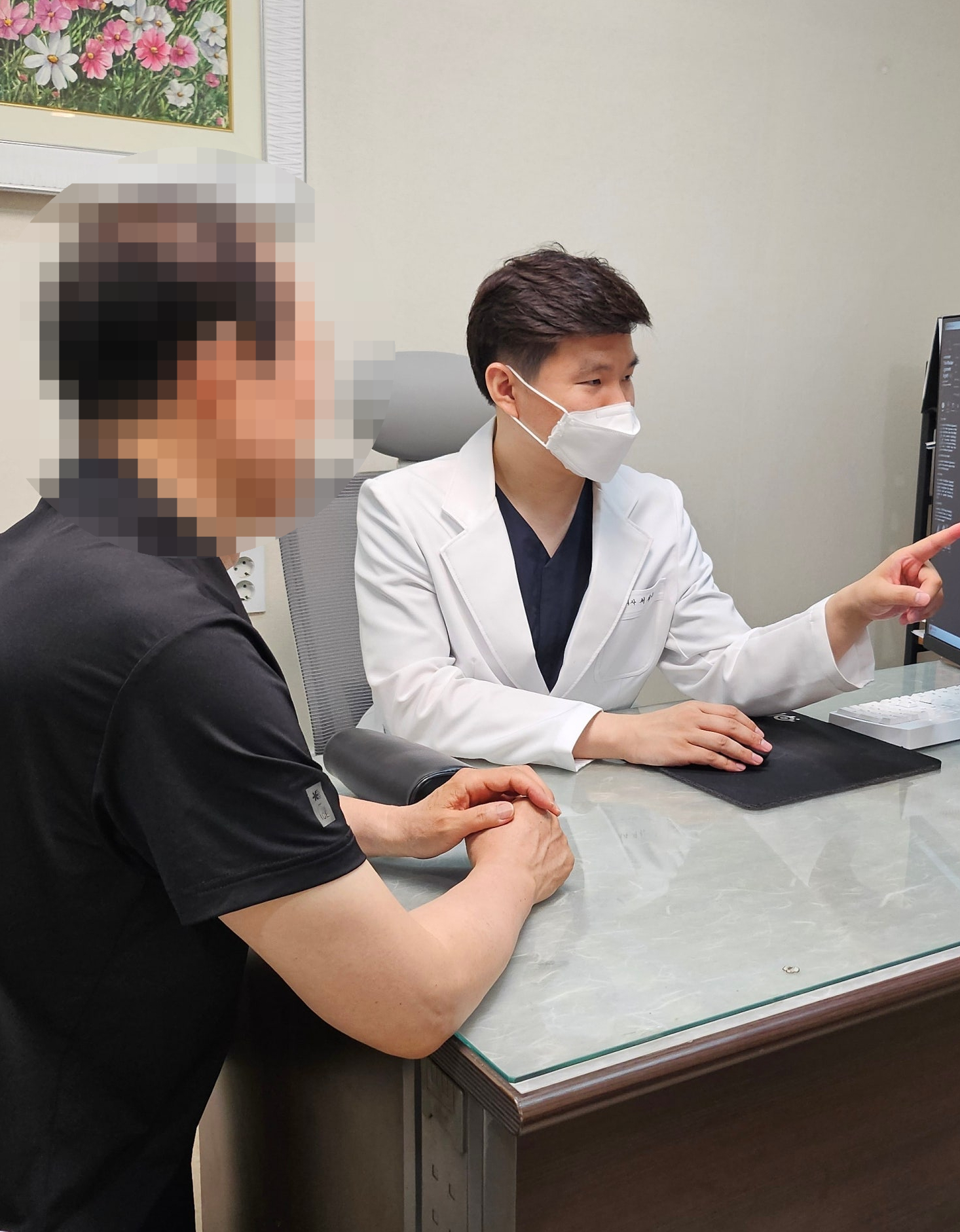
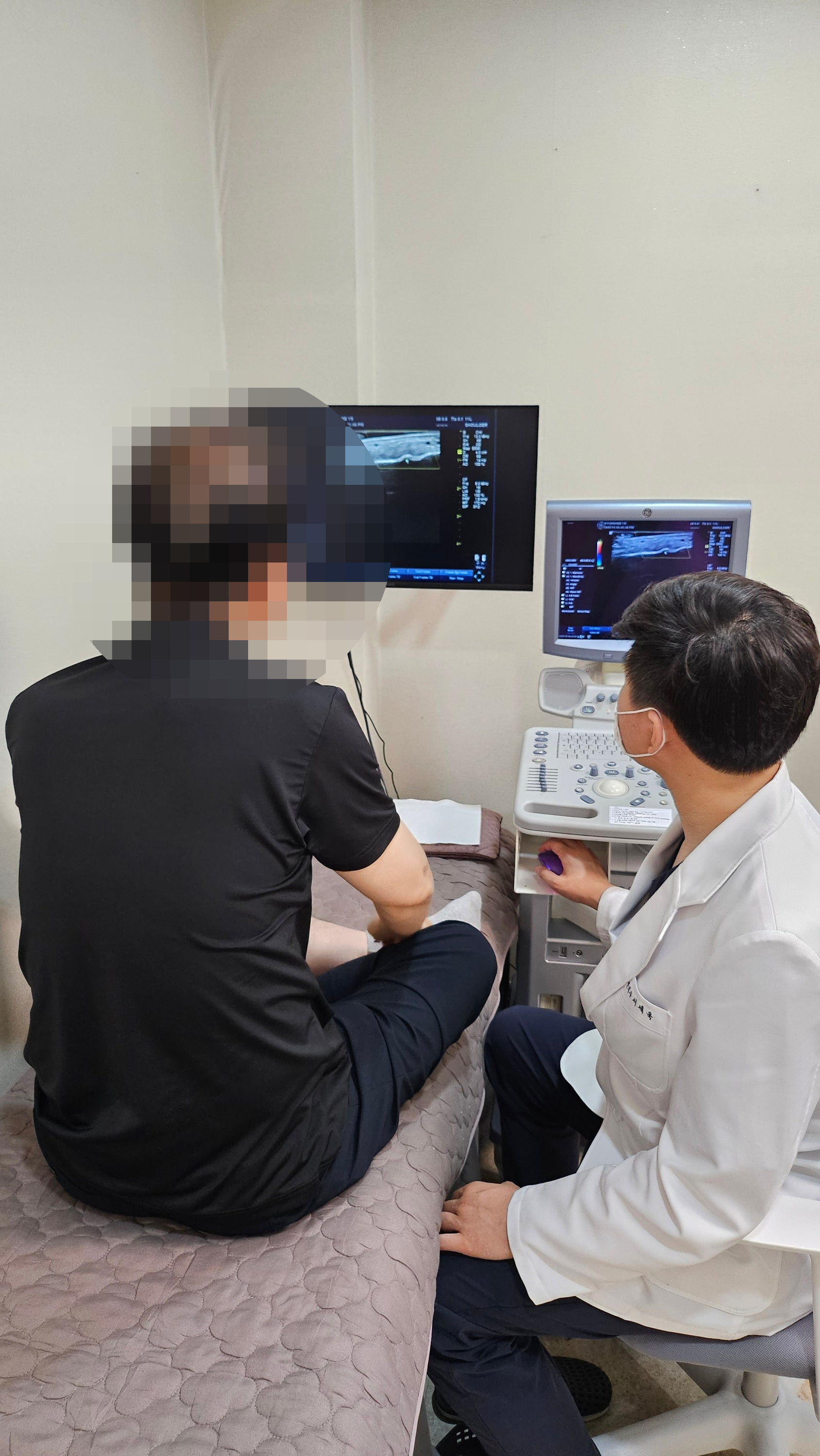
At our clinic,
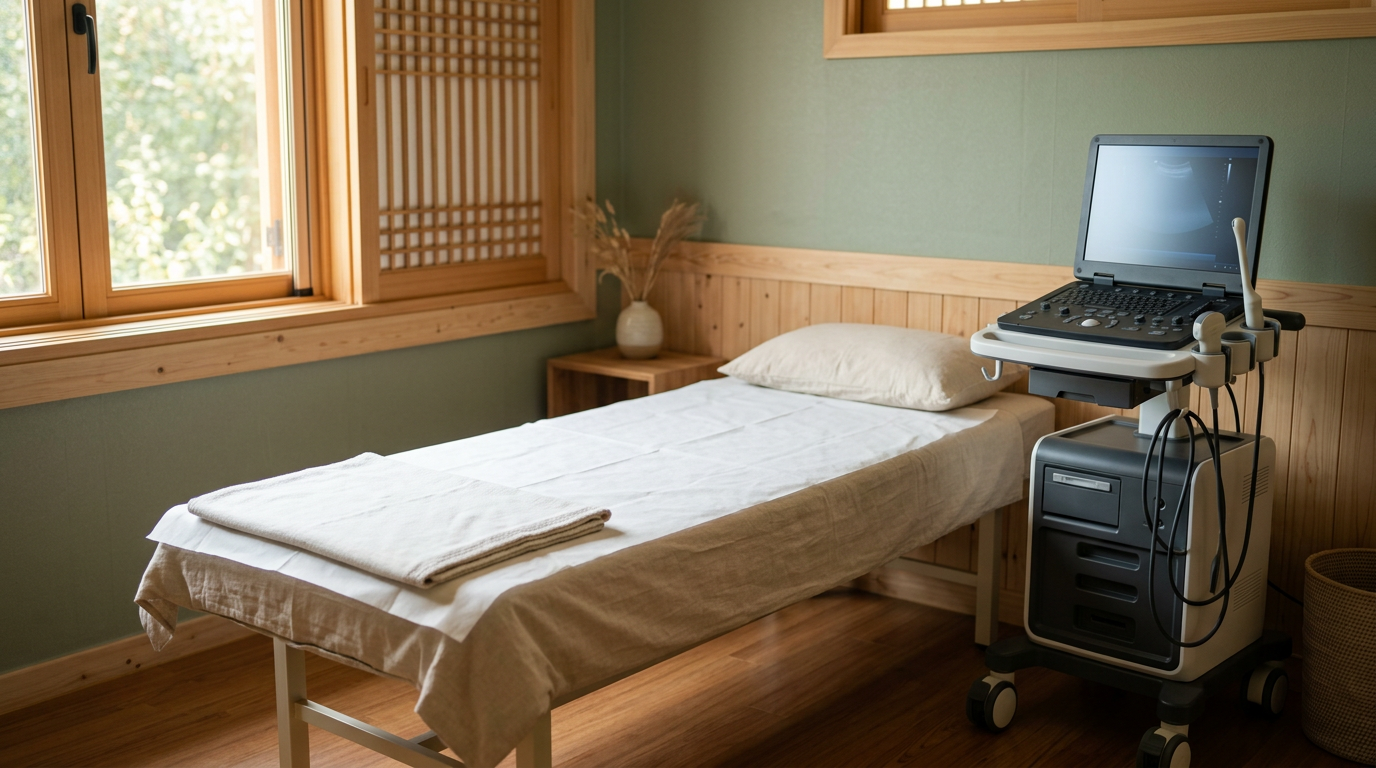
in such cases we use ultrasound examination
to directly check the condition of the piriformis.
How tightly the muscle is knotted,
whether there is swelling,
and exactly where it is pressing on the nerve —
we begin treatment after grasping all of this.
How is it treated,
and how long does it take?
The core of treatment
is releasing the knotted, swollen piriformis.
[We treat it in roughly three stages.]Stage one: calming the swelling and pain.
After confirming the location with ultrasound,
we place pharmacopuncture directly around the piriformis.
Pharmacopuncture is a treatment that injects a medicine extracted
from herbal medicine components straight into the painful area.
Along with this, using acupuncture and electroacupuncture,
we release the muscle tension together.
Stage two: restoring function.
Once the pain begins to subside,
we need to revive the movement of the stiffened muscles and joints.
With moxibustion and cupping,
we help circulation in the deep muscle layers and combine it with physical therapy.
Stage three: preventing recurrence.
I will speak about this part right next.
The treatment period
varies depending on the severity of symptoms,
but for mild cases
daily life becomes comfortable in about 2 to 4 weeks,
and for cases that have stiffened chronically,
it is best to continue treatment steadily for about 6 to 8 weeks.
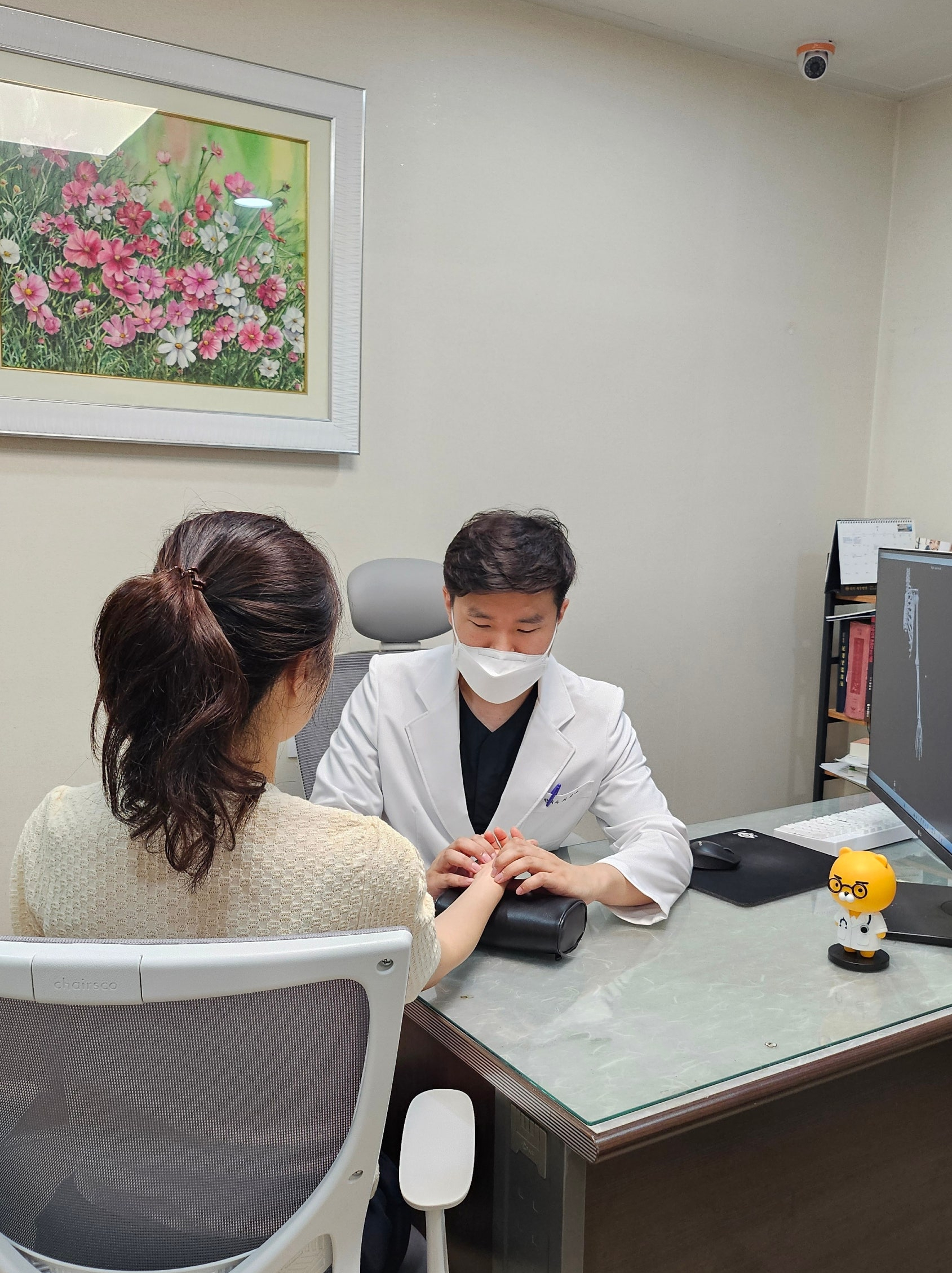
There is one thing I really want to tell you.
With piriformis syndrome,
less pain does not mean you are fully healed.
If you stop after only relieving the pain,
the muscle will knot up again within the same lifestyle.
That is why I tell my patients:
let us treat it not until it stops hurting,
but until it will not hurt again.
After treatment, what should you do to keep it from coming back?
In truth, this question is the most important.
Piriformis syndrome
is a condition closely tied to lifestyle habits.
The most common cause
is the habit of sitting for long periods.
Office workers,
people who drive taxis or buses,
people who have a habit of sitting with their legs crossed —
In these people the piriformis
is pressed all day long,
so it can knot up again at any time.
That is why, along with treatment,
day-to-day management is absolutely necessary.

What I always want to advise my patients is this:
once an hour, get up from your seat
and walk a little,
and before going to bed,
gently stretch your buttocks and hip joints.
Five minutes a day is enough.
This one small habit
can greatly reduce recurrence.
.jpeg?type=w80_blur)
Let me summarize today's content.
One.
Even if your MRI is normal,
if the piriformis presses on the nerve, a sharp pain in the buttock
can occur every time you sit.
An ultrasound examination is the first step.
Two.
By applying pharmacopuncture, acupuncture, electroacupuncture, moxibustion, and physical therapy step by step,
you can get better without surgery.
Three.
If you review your sitting habits and combine them with simple stretching,
you can reduce the worry of recurrence.
Icheon piriformis syndrome —
that sharp pain you feel just from sitting
can heal better than you might think, once you know the exact cause.
This has been Seo Se-wook of Kyunghee Yakson Korean Medicine Clinic in Icheon.
Thank you.
[Pain treatment — this is how I do it.]
Learn about the treatment philosophy of Kyunghee Yakson Korean Medicine Clinic
[Things you were curious about before getting treatment at a Korean medicine clinic]
I will tell you everything.
For those who have only ever been told
that it's degenerative and nothing can be done,
I have written this article.
[Clinic Hours]
Mon, Wed, Fri 9:00-20:00 (reception closes at 19:00)
Tue, Thu 9:00-18:00 (reception closes at 17:00)
Lunch break (13:00-14:00)
Saturday 09:00-14:00
(reception closes at 13:00, open through lunch without a break.)
Closed every Sunday.
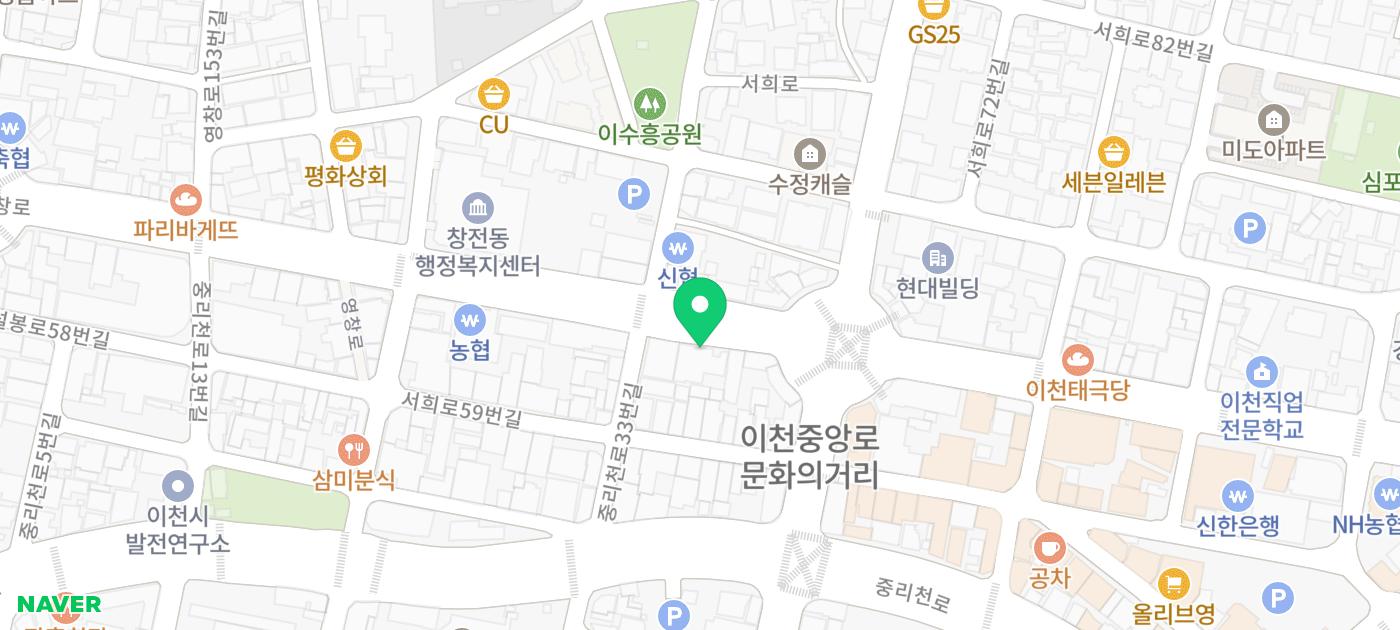
[Directions]
Address: 1st floor, Baeyoung Building, 178 Yeongchang-ro, Icheon
Silver Intersection (former KEB/Hana Bank site)
Across from NC Department Store,
in the building right next to Davich Optical Icheon Jungang branch
About 100m toward
Shinhan Bank / Kookmin Bank
[By Public Transit]
Gwango-dong stop:
Go straight about 200m toward Shinhan / Kookmin Bank
Shinhan Bank stop:
Go straight toward Gwango Market,
then it is across the central intersection
[Parking Information]
When using the Gwango Market public parking lot,
1 hour of free parking is available.
Icheon Piriformis Syndrome
When Just Sitting Sends a Sharp Pain Through Your Buttock
Kyunghee Yakson Korean Medicine Clinic
Kyunghee Yakson Korean Medicine Clinic, 1st floor, 178 Yeongchang-ro, Icheon-si, Gyeonggi-do
Check-in on this blog
Other posts about this place